
News Archive

Global Campaign to Release Seven Eritrean Christians Detained for Over Two Decades. Voices for Justice, a collaborative international community focused on securing justice for individuals and communities around the world who are targeted for their faith, has just launched its first global campaign. The campaign will bring together organizations, churches, and individuals from all over…
Read More
The Religious Liberty Partnership (RLP) is pleased to announce that the RLP 2026 Annual Global Consultation will be held 20-23 April 2026 in Prague, Czechia! The RLP annual consultation is a unique platform that brings together RLP member organizational CEOs and other key Christian leaders from the political, academic, and missional community to build relationships,…
Read More
The Religious Liberty Partnership (RLP) is pleased to announce that the RLP 2025 Annual Global Consultation will be held 7-10 April 2025 in Nairobi, Kenya! The RLP annual consultation is a unique platform that brings together RLP member organizational CEOs and other key Christian leaders from the political, academic, and missional community to build relationships,…
Read More
The Religious Liberty Partnership (RLP) is pleased to announce that the RLP 2024 Annual Consultation will be held 8-11 April 2024 in Toronto, Canada! The RLP annual consultation is a unique platform that brings together RLP member organizational CEOs and other key leaders from the political, academic, and missional community to build relationships, discuss and…
Read More
FOR IMMEDIATE RELEASE: 19 May 2022. The Religious Liberty Partnership (RLP) announced this week that Roshini Wickremesinhe will become its first Executive Director. Ms. Wickremesinhe has been a human rights advocate, writer, researcher, and trainer on religious freedom and human rights for 20 years. “Ms. Wickremesinhe has been a strong advocate and tireless worker for…
Read More
The Religious Liberty Partnership (RLP) held its 2022 Consultation in Warsaw, Poland. About 90 CEOs and key Christian leaders from over 30 countries participated in the gathering, which is normally held annually but had been postponed the past two years because of Covid restrictions. “The primary focus of the event was on Eurasia and Central…
Read More
Persecution of Christians has reached the highest levels since the Open Doors World Watch List began nearly 30 years ago. More than 360 million Christians suffer high levels of persecution and discrimination for their faith. In the 2022 World Watch List top 50 alone, 312 million Christians face very high or extreme levels. That is…
Read More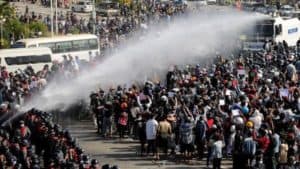
The Religious Liberty Partnership (RLP), an international coalition of Christian organisations, released a Statement this week on Myanmar, condemning the illegal coup of last February by the military and expressing deep concern about the suppression on any perceived threat to their power, including religious communities and religious leaders. “We watched with uneasiness the gross violation…
Read More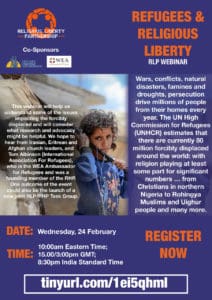
The Religious Liberty Partnership (RLP), in cooperation with the Refugee Highway Partnership (RHP) and World Evangelical Alliance (WEA) hosted a webinar on February 24 on “Refugees and Religious Liberty.” The goal of the event was to explore the overlap in issues between the large numbers of refugees and asylum seekers and their religious reasons for…
Read More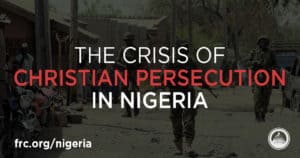
Since 2015, over 12,000 Christians have been killed in Nigeria. Countless more believers have been gravely injured, displaced, kidnapped, or have simply disappeared. Read (and download) this well-written and comprehensive report on Nigeria from Lela Gilbert, Senior Fellow of International Religious Freedom at the Family Research Council (FRC), an RLP Associate Member. https://downloads.frc.org/EF/EF20G16.pdf
Read More